Monday, May 23, 2011

SON Sreypich - សុន ស្រីពេជ្រ “New Singer with Sweet Voice as Oldies Singer of Cambodia”

SON Sreypich

SON Sreypich is a new singer in Cambodia with good voice from birth. She was born on January 01, 1985. Her place of birth is in Svay Poy Village, Takream Commune, Banan District, Battambang Province. Her father is a famous comedian and wedding singer named Sangsis (Birth name: Mary Son). She is the fifth child of 7 sibliings in her family. She and another two siblings, SON Seb & SON Sreynith, like singing as her father. However, her father has the intention for her to further higher education rather than singing. According to local news in Cambodia, she can sing since she was 15 years old. She did not sing until she graduated from high school (Bac II) in which she started attending wedding singing career with her father. Since then she has been admired for her good voice from people who heard her song in the wedding. However, she chose Tourism Management as her major at university instead, but she is surely promoting tourism in Cambodia as her university education. Until now, she has been being well-known with many songs she sang for Ministry of Tourism and the songs were written by the lyricist HUN Heng. Her voice is clear and sweet as the voice of female singers before POL Pot Regime such as HUY Meas, PEN Rorn, ROS Sereysothea, POV Vannary, SO Savoeurn, SIM Touch, etc. The songs described the natural view and the development of Cambodia, Kingdom of Wonder, are suitable for her voice to sing. When she sang emotional songs, her voice is considered to be great and very sweet. She is helpful and grateful. Recently, she is the supporter for her whole family since her father is being sick. She earns money through singing for Ministry of Tourism, Samdech Prime Minister HUN Sen, and other local singing productions. She also loves her own country and culture. On Khmer New Year days, she and other singers along the Bayon TV Group voluntarily went to sing for soldiers in Preah Vihear Province near the border as the show of sympathy for the invasion of Thailand over land around temple of 4.6 sq km and Preah Vihear Temple, World Cultural Heritage and Cultural Heritage of Cambodia from Angkor Empire. The show on TV of her and other singers was broadcasted for all Cambodian Citizens to watch in the period of three days in Khmer New Year (Buddha Year 2555) season. She is so friendsly as meeting soldier near the border. In short, Cambodia will get her reputation for good voice which lost for over thirty years. SON Sreypich will be the most famous female singer in the near future and will contribute to the fame of Khmer arts and culture. “Source of gold will be forever recovered again and again!”

By: POK Panhavuth


Friday, May 20, 2011

Water for Life in Cambodia


Water is very necessary for life on this Earth. The same as other areas of the world, water plays an important role to support life in Cambodia. Nearly fifteen million people have recently been living in Cambodia with different kinds of biodiversity in which depend on water resource throughout the country. According to history, life of Cambodian people and water was always united. On the sculpture of Bayon Temple’s wall shows that people living in Angkor City use water to support their daily life as Khmer people today. Water is used with different purposes such as supporting agriculture, using in the house, doing fisheries, and balancing the temple to stand for thousand of years. Water also sustains the ecological system as the way for the life of biodiversity and allows life to exist abundantly. Every where in Cambodia consists of water resource; there are a lot of water in some places & little in other places. However, most of the areas of Cambodia are full of water resource. The main water resource of Cambodia is Tonle Sap Lake (Boeung Tonle Sap) in which covers 3,000 sq km2 in hot season and around 10,000 sq km2 in rainy season. Tonle Sap Lake stores much water for use in the country and provides the living place for abundant biodiversity, especially fish which is the main food for Cambodian citizens. Another source is Mekong River which allows the flow of water from Tibet Area of China to Cambodia.  Big amount of water from Mekong River flows into Tonle Sap Lake in rainy season and flows out of it in hot season to lower Mekong River and Bassac River. Besides that, small rivers providing water resources flows from high land, especially from Cardamom Mountain Range (Chuor Phnom Kravanh) and Dangrek Mountain Range (Chuor Phnom Dangrek). Those small rivers are Sangker River, Maung River, Ropov River, Chikreng River, Sereysorphorn River, Bovel River, Meteuk River, Bati River, Sekong River, Sesan River, Siem Reap River, Pursat River, Staung River, Srepok River, Kampot River, Chinit River, Prek Chhlong River, Prek Thnort River, Toch River, Tatai River, East Vay Kor River, West Vay Kor River, and so on. Since then, it is remarked that for the early 20th century, water resource is enough for lives in Cambodia, but now there is a big change that water flow has changed meanwhile the rain is not regular as before. There is a reason for that in which is the block of water at several hydropower dams along upper Mekong River and other branch river of it. It has changed the water flows and ecological system in Cambodia. There is a prediction that one day Cambodia will suffer from those activities done by upper countries of Mekong River. However, it is believed that Cambodia will get no problems if all countries along Mekong River consider more about the effects on Cambodia positively and they can find solution to avoid effects on this small country. “Helping Cambodia is helping the lives of million people and protecting biodiversity of the world.”

By: POK Panhavuth


Buddhism (Hinayana), Pagoda, and Monk of Cambodia

Khmer Pagoda (Wat)

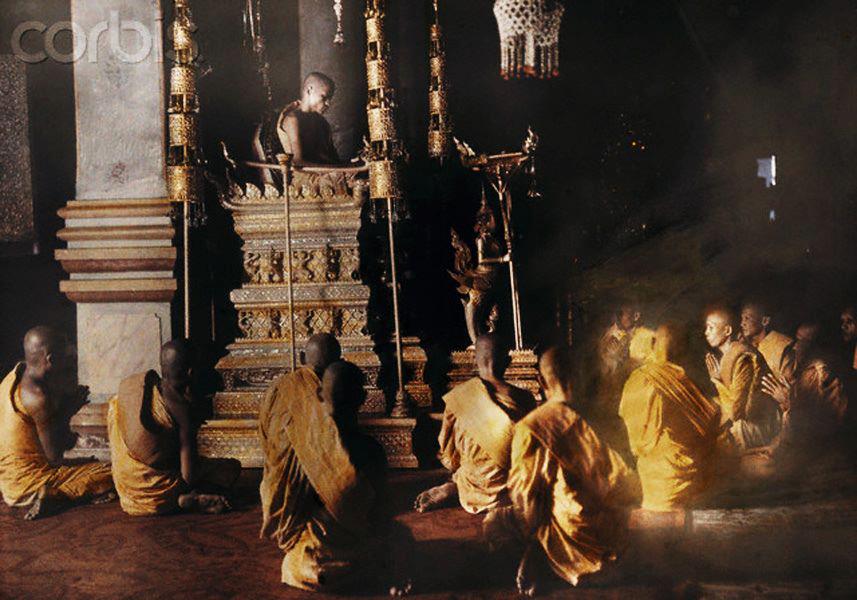
After the fall of Angkor, Buddhism (Hinayana) has been the formal religion in Cambodia in stead of Hinduism which was the dominant religion since the creation of Khmer State in the early 1st century under the leading of His Royal Majesty SORMA (King of Nokor Phnom-Khmer State) who later got married with King KORDIN from India. Therefore, Hinduism was brought by King KORDIN into Khmer State and it lasted until the end of Angkor Empire. It should be remarked that Buddhism (Mahayana) had also been one of the religion before and during Angkor Empire, too. The evidence for Buddhism (Mahayana) can be seen at Bayon Temple and other temples which were built by King Jayavarman VII such as Buddha statues, King Jayavarman VII statue sitting for concentration as Buddha, and sculpture on those temples in which most of them were damaged by some believers of Hinduism as violating the Buddhism (Conflict of Religion for short period of time in the end of Angkor Era). Buddhism of Mahayana and Hinayana were a bit difference in daily practice. However, since the Buddhism of Hinayana was more satisfied for Khmer people and the less reliability of Hinduism and Buddhism (Mahayana) in controlling the state losing documentations through the invasion from Siam State (Thailand), King of Khmer Kingdom and Khmer people changed to believe the Buddhism of Hinayana. Since then, there were a lot of pagodas and Buddhist statues built from the early of 15th century. Pagodas (in Khmer called Wat) were built of wood other than stone which was used for building temples in previous era, so it was the end of temple building in Cambodia. Exceptionally, most of Buddha statues were built of stone. Angkor Wat Temple which was built from 1113 to 1150 under the King Sorya Varman II was changed to be Buddhism pagoda and became a popular pagoda in Longvek Era (from the end of 15th to the end of 16th century). More importantly, the tradition of letting young man to be a monk has been beginning from that time until today. According to the tradition of Khmer nation, most of the young men had to live in pagoda as a month to learn the Pali Sanskrit, Buddha’s dharma, Khmer Literature, Khmer History, and the psychological education. Some men went to live in the pagoda since the youngest age to serve the monk until they became the adult in which they could be allowed to live as a monk in the pagoda for showing their gratefulness for ancestors and especially their parents. They learnt to be the leader for the country as the leader for their family in the future. All Khmer men who used to live as monk were seen as the polite and thoughtful men for women to depend on. Buddhism of Hinayana allowed Khmer people to gather good documentations from one generation to another generation by keeping in the pagoda. However, those documentations usually lost several times during the war with neighboring countries such as Siam State (from 15th to 19th century) and Vietnam State (from 17th to 19th century). Most of important documentations and valuable Buddhist statues were taken to Siam State through the invasion several times after the fall of Angkor Empire, especially during the invasion of Siam State on Khmer Kingdom in conquering Longvek Capital in 1594. Some of the left documentations were fired by both countries in the following regime. Even though there was less documentation and a lot of wars, Khmer people still did their best to protect and gathered their memory about Buddhism into documentations again. Under the French colonial, Buddhism was more secured and developed in good condition. After getting independence from France on November 9th, 1953, Buddhism was in the golden age until April 17th, 1975. Unfortunately, every thing related to Buddhism was seriously damaged in Pol Pot or Khmer Rouge Regime. Most pagodas were broken and some of them were considered as the place for storing rice, salt, and living place for pig, etc. Therefore, picture on the wall and ceiling of Khmer ancestors in ancient pagodas whose age was more than 100 years was affected in bad condition as the example of Kompong Trolach pagoda in Kompong Chhnang Province. Most of Buddhism documentations were completely fired and most of the monks were killed. For a few decades of these local wars in Cambodia, Buddhism reduced its influence on Khmer people’s believe since the practice of some monks today has been seeing weaker and weaker. As the result, some of residents in this generation still believe on Buddhist in mind other than some of the monks. However, the Buddhism practice and believe of Khmer people in some area of Cambodia, southeastern area of Thailand, Kampuchea Krom region (southern region of Vietnam), and in foreign countries is considered to be good. In short, there is optimism for better practice of Buddhism in Cambodia in the future as the golden age (1953-1975) and a hope for Buddhism management to take action to reform what is bad into good again. Buddhism is really important since it is the guideline for Khmer people. “If there is a change, Control it in good manner!”

By: POK Panhavuth


Thursday, May 19, 2011

SIN Sisamuth - ស៊ីន ស៊ីសាមុត “Akthireach Samleng Meas” (Golden Voice of Cambodia)

ស៊ីន ស៊ីសាមុត
SIN Sisamuth

SIN Sisamuth was the most famous singer and talent lyricist in Cambodia before Pol Pot Regime, titled “Akthireach Samleng Meas”. His voice is soft and very sweet to listen. He sang different kind of songs like traditional (Romvong, Lam Leav, Saravan…), Rock & Roll, Twist, Jerk, Jazz, Cha Cha Cha, Ago Go, Madison, Hala Hala, Mambo, Ayai, Yikae, Chapey, Bassac, emotional, etc. He was born on August 23, 1932 in Steung Treng Province. On the day of his birth, there was the strange phenomenon that all the chicken in the village shouted as the welcome for his birth in the year of rooster. SIN Sisamuth had four siblings; two brothers and two sisters. He was the youngest child in the family. His father, SIN Leang, was the prison guard in Battambang Province and the former revolutionized soldier against the French Colonial; later he died because of serious illness. SIN Sisamuth used to live with his father some time in Battambang Province. His mother, SEB Bunlei, was a Laotian-Chinese; after the death of his father, she remarried and gave birth to another two children.

SIN Sisamuth was considered as serious and helpful. He was a quiet man and some days talked only a few words per day; he usually locked the door of his room and concentrated on song writing. In writing songs, he usually consulted with three different dictionaries (Khmer, Pali, and Sanskrit) to choose the right words carefully. His house in 1970s was near Tuol Tumpong Market (Russian Market) along the road 454 in Phnom Penh today. His favorite food is Laotian and Khmer food including Prohok and Pha Ork Trey; he did not have alcoholic drinks, chili, pepper and cigarette since it affected his voice. Additionally, one of his friend said that while he and SIN Sisamuth was drinking coffee in the morning; SIN Sisamuth talked and felt unconscious about the amount of sugar he had put into his coffee. Therefore, it means that SIN Sisamuth did not take much sweet things that might cause problems to his voice. It should be noticed that after finishing performing, he usually ate porridge with his co-workers and SIV Sun was an administrative person as secretary of SIN Sisamuth to arrange the documents tidily and assist SIN Sisamuth in other administrative tasks. In his free time, he likes playing soccer and flying kites. Besides, he likes watching film, Khmer and French. He could speak Khmer, Lao, Thai, French and English very well.

He attended the primary school in Steung Treng Town when he was five years old. He was a smart and kind boy reading books during his free time; everyone in the school liked him. He also showed his interest in music when he was 6 years old, his school usually called him to play guitar during the special ceremony. Furthermore, he usually visited the nearby pagoda studying more from monks about Khmer Literature, Pali, Sanskrit, and the articles on Buddhism. His hard working brought a success for higher education. In 1951, he moved to Phnom Penh to pursue his higher degree in Health Science staying with his uncle; he rarely went out and just stayed at home after school. Being interested in singing and musical writing, he strived very hard to learn by himself for both skills. His talent showed up in the college being popular among students and professors. He was usually nominated to sing and play musical instruments during the college ceremony. Simultaneously, he created a band, Preah Chan Reaksmey, consisting of 9 members. In early 1953, his band became so famous in Phnom Penh and was invited to join the national radio band, Reach Sey. Then he sang in many occasions such as wedding ceremony, radio program, etc. His parents were not happy about him taking singing career, but he had to pursue what he likes from birth.

In 1953, he became a famous radio singer singing and writing music using mandolin. Simultaneously, he graduated from college in the major of Health Science and also worked for Preah Keto Mealea Hospital besides singing career. After that, he married his cousin, KHAO Thorng Gnut, as the arrangement of older people in the family and got four children for the following years. He used to challenge in a singing contest in Phnom Penh and got the second rank since he lacked of gesture while he was singing. In fact, everyone believed that he had the greatest voice and would get the first rank if he used gesture well. His fame had been quickly well-known and the information was brought to Queen SISOWATH Kosomak Nearyrath Sereyvathana, the mother of King NORODOM Shihanouk. She invited SIN Sisamuth to join the royal band singing for the formal occasions of the Royal Palace.

One of royal songs sung by SIN Sisamuth was “Romvong Ekareach” to alert all Cambodian residents to show their happiness and solidarity for Khmer Independent. Also, he and his friend, SOS Mat was appointed by Queen SISOWATH Kosomak as the permanent nurse in the Royal Palace, too.  Since then SIN Sisamuth gained more respect and honor from the public and royal group; he was filmed in King Shihanouk’s movies singing with SIENG Dy still remained until now. In the 1950s, he pursued his singing career in public with other singers and lyricists like SIENG Dy, MAO Sareth, KEO Setha, POV Sipho, SVAY Som Oeur, HASS Salorn, MA Laopi, SOS Mat, MAE Bun, etc. In Sangkum Reastr Niyum Regime, SIN Sisamut usually followed King NORODOM Shihanouk to overseas singing. The King’s songs he sang were “Phnom Penh”, “Reatrey Chuob Pheak” (with KEO Setha), Tassana Krong Phnom Penh (with MAO Sareth), and so on. Other famous songs are Somros Chhnae Kep, Chong Srol, Violin Snaeha, Anusavry Phnom Kravanh, Srey Sros Khmeng, Prek Eng Os Sangkheum, Steung Pursat, etc. Unfortunately, his fame caused the family conflicts and his wife went back to Steung Treng Province being a nun.

His voice became sweeter and sweeter. In 1963, he sang the song “Champa Battambang” quickly catching the attentions of all Cambodian people; this song was broadcasted as the first song on Khmer TV in 1965 according to his interview on TV in 1971. In this 1960s, his popularity went to the peak of his fame. He started to sing with next generation singers like SO Savoeurn, DY Saveth, PEN Rorn (1966), ROS Sereysothea (1967), HUY Meas, IN Yeng, MEAS Samorn, HEM Sovan, etc. Singing not only in Khmer, he also sang in English, French, and Thai. Therefore, he got an innovative idea to mix the music of foreign and Khmer together creating very good songs. In 1967, he wrote and sang the song “Champei Siem Reap” for his wife; they lived together again. He continued to write more songs; his songs were more famous with his new singing partner, ROS Sereysothea. Unfortunately, ROS Sereysothea returned to Battambang Province because of the conflicts with her husband, SOS Math. Facing such situation, he took action to recover by persuading ROS Sereysothea to come back and protected her from the disturbance of SOS Math. One day, he stood to prevent SOS Math disturb ROS Sereysothea while they were singing together the song “Kort Bros Mok Khmol”. He said he was the one to take her there, so he must the one to protect her. Then SOS Math left there quickly.

On March 18, 1970 the coup d’état in Phnom Penh caused a change to the life of SIN Sisamut. He was forced to sing the patriotic songs against King Shihanouk and Khmer Rouge Army even though he paid respect and trust to King Shihanouk and Royal Family. Those patriotic songs are “Lea Srey Tov Chbaing”, “Samrek Chheam Khmer”, “Lea Pov Tov Bomreu Chiet”, “Bong Ba’Oun Bei Neak”, etc. In this regime, he did not have enough time to write songs, so most of the songs he sang were written exclusively by other lyricist VOY Hor. His voice still kept him the most famous male singer in Cambodia from the early 1950s to the mid 1970s. In 1974, King of Thailand called him to live in Thailand and be a singer for Thai nation instead of Cambodia. Being wrong to think that way for SIN Sisamut, he would devote his life to die in his homeland better than running away, so he refused to that request.

On April 17, 1975, SIN Sisamut forced to leave Phnom Penh separately from his family for Koh Thom district, Kandal Province. On the way, he met KONG Bunchhoeurn and talked a while; a Khmer Rouge Officer came with the radio broadcasting his song and asked him whether that is his voice (Nis Chea Samleng Mith Men Te?). One month later in Koh Thom District, he was forced by Khmer Rouge officers to sing the songs for Khmer Rouge Regime, but he failed to satisfy the Khmer Rouge Officers. On May 18, 1976, he was killed; before he was killed, he asked the Khmer Rouge Officers to sing a patriotic song as the last voice of his life. Somehow when he finished, they killed him immediately. His wife and two children among four children were alive after this black regime.

In conclusion, life of SIN Sisamut (1932-1976), Cambodia’s Golden Voice, was a real experience for all people to study and learn. Being so sad to lose such a talent person from Cambodia; not only his talent in arts and medical skill, but his strong supports on his nation was gone with his soul. He died with less hope for the future of Cambodia; but his soul will see the development of Cambodia today and keep smiling again for the future prosperity of Cambodia. “Even though there is the death in front, believe and trust on own nation will never be forgotten!” 

(Source: Wikipedia on SIN Sisamuth in Khmer Version and other sources)

By: POK Panhavuth

Saturday, May 7, 2011

Fall of Phnom Penh in 1975 & Brief Life of Pen Rorn in Pol Pot Regime


Ghost City


On April 17, 1975 Khmer Rouge army overcame Lon Nol army with strong struggle and trick over Lon Nol’s army. Khmer Rouge army had broken the Cambodian-Japanese Friendship Bridge in 1973 and controlled all the way in which the support for Phnom Penh such as food and weapon was conducted. Khmer Rouge army fought with Lon Nol army who was in Phnom Penh by attacking through all directions around Phnom Penh and threw bombs over Phnom Penh city for a few years before occupying Phnom Penh successfully. Also, Khmer Rouge army used psychology to defeat the army force of Lon Nol such as there would be peace and integration of Khmer Rouge army and Lon Nol army into new regime and told a lie on microphone that some areas of Lon Nol was defeated while they had not been conquered yet. Besides that reasons for success of Khmer Rouge, most civilians in Phnom Penh already supported the attack on Lon Nol side since they loved King Norodom Shihanouk. After the conquer was conducted, Khmer Rouge army immediately forced Phnom Penh people or 17 Mesa people with the population of over 2 million people to leave Phnom Penh by telling that Khmer Rouge army needed to clean the city and telling a lie that United State of America’s air force would drop bombs over Phnom Penh; all people would need to leave only three days and return to Phnom Penh after that. During that day, the situation of Phnom Penh was so bad to see. There were a lot of injured people and broken building with fire and smoke throughout this city. All foreigners in Phnom Penh rushed to get into their embassy for the opportunity to leave Cambodia safely. Phnom Penh people felt not clear about the situation. First time for arrival of Khmer Rouge army, they appreciated for the conquer over Lon Nol army with expectation for peace after ending this 5-year war since King Norodom Shihanouk was considered to be the top leader for new regime, but later they felt very scared for Khmer Rouge army’s activity. Pol Pot (Birth name: Salot Sar) led the country in the wrong way for the prosperity of Cambodia and kept King Shihanouk only the symbol for power and the head of state until April 2, 1976 he resigned while he was kept in the Royal Palace in Phnom Penh. Wrong expectation made all citizens disappointed after April 17, 1975. The memory of that day would never be forgotten. Khmer Rouge army used guns to threaten Phnom Penh people to leave their house and someone who slowly moved out of their house or seemed no intention to leave as the command of Khmer Rouge army; they were killed suddenly at the place. A lot of civilians were believed to be killed just only that day. People who agreed to leave took only some food, cloth, and valuable things with them and walked through the crowd along the road with their family. Some family members were not with their family during that time since they were in other places, so a lot of people were believed to get lost their family on that day and never be able to meet their family anymore because most of them died in different places in Pol Pot Regime. Along the road, there were a lot of vehicles stopping untidily such as car, motorbike, bicycle, cyclo, etc because of the owners were forced to leave their vehicles immediately when Khmer Rouge army completely occupied the whole city. Money case of Lon Nol Regime was put away on the ground. People walked and walked in the big crowd through city road towards each national road. Along all national roads, there was a group of Khmer Rouge army checked the identity of people to find Lon Nol army and high ranking people; if they found, they would be captured and killed at other places by keeping out of people’s sight or taken to Tuol Sleng (Monty SAR 21) in which had been Tuol Svay Prey High School in Lon Nol Regime. Under the heat of the sun in April, it was believed to be hard for people to walk out of Phnom Penh towards the destination in the countryside. After many hours had gone, Phnom Penh became very quiet and was cleaned by Khmer Rouge in which all roads were emptied; then only some of Khmer Rouge army stayed in this city. Phnom Penh looked like “Ghost City”. Additionally, not all Khmer Rouge army agreed to do so, some leaders in the army tried to debate for this action and opposed to the regime, but all of them were killed continuously in 3-year 8-month 20days regime as most of the Lon Nol army and officials who escaped to countryside with their family, too.


PEN Rorn - ប៉ែន​ រ៉ន
Famous Singer (Before POL Pot Regime)

Not difference from other people living in Phnom Penh, many Khmer artists including singers, musicians, dancers, authors, radio hosts, movie stars, and so on were forced to leave Phnom Penh for different destinations. Among of those, Pen Rorn, a well-known female singer in Cambodia, with her two sons were forced to walk out of Phnom Penh through national road number two in which she was broken away with unknown reason from her husband and her sister, Pen Rorm. As the witness in Takeo province, aunt Bun Yoeurn who was a person to share the cooked rice to 17 Mesa people along national road number 2 said that she met the famous singer “Pen Rorn” when she came to get the cooked rice from her and told aunt Bun Yoeurn that she was a famous singer and told her name. At first time, she did not recognize her because she had never met Pen Rorn like this before just only used to see her on the stage when she came to sing the song for King Norodom Shihanouk opening celebration of the infrastructure achievement in the province one or two times in Sangkum Reastr Niyum regime. She told the researcher who broadcasted this information on radio throughout Cambodia, especially broadcasting on radio in Battambang several years ago. According to aunt Bun Yoeurn, Pen Rorn was forced to go to Komar Chheanmok village in this province. After having a meal with her two sons, Pen Rorn continued her travelling to that destination. There is a believe that Pen Rorn was forced to work in agriculture as other people from Phnom Penh and had the same condition. 

In the early 1976, Khmer Rouge organization cheated Phnom Penh people in Takeo to tell their background while living in Phnom Penh and told that they would return all Phnom Penh people to hold the same position in Phnom Penh as before. Without knowing this trick, Pen Rorn registered her name on the list with hope to be a famous singer again while other 17 Mesa people did the same as her. However, Khmer Rouge organization planned to kill them all by taking them to put in Trop Kor pagoda for a night. Lok Ta Achar Nang, the witness, saw them lead those people including Pen Rorn and her two sons walking towards Trop Kor pagoda from the top of palm tree. In the pagoda, there were Pen Rorn and her two sons, Trong Orng, Kloy Dey, and other Phnom Penh people as family. Next morning, Khmer Rouge committees cheated all 17 Mesa people in the pagoda that they would take them back to Phnom Penh now. Then Khmer Rouge soldiers closed the eye of them with something (maybe kroma or black piece of cloth) and tied their hand with rope together to walk in line towards the north of pagoda. Along the way, Khmer Rouge soldiers asked all of them include Pen Rorn to take off all their cloth except underwear by telling them that they needed to get across the river and would get new cloth at the other river bank. Suddenly, Pen Rorn said “Pu (uncle) could take it as pu wanted since I had some cloth left in the cloth pack”. Then she and other people took off the cloth and gave it to the soldiers. After that, those soldiers reached B-52 big hole that prepared in advance with stick and other sharp equipments near it. This place was in the north 200 meter away from Trop Kor pagoda in Takeo province. Then those soldiers started to hit those people including Pen Rorn and her beloved two sons dead and pushed their body into the B-52 big hole. There was a wonder whether Pen Rorn knew in advance about the trick or not before she was killed since there was no river.


As this really happened in Cambodia around 35 to 36 years ago, there is still the sad memory for this events and a wish for it not to happen again in our country. Millions of Khmer people and other ethnic group died within the local war as the example of Pen Rorn’s death in Pol Pot Regime. The experience of instable political system gave the understanding that to stand in the world even though our country is small, there is a need to be self-independent with our own believe for our nation and the stability of country should be the first thing to be considered before making decisions to do something because peace is really important for Cambodian people nowadays. However, the opportunity for development has just been going on slowly and now we are getting trouble with Thailand near the border of Oddarmeanchey and Preah Vihear Province against Sorin and Sisaket Province of Thailand in which Thailand claimed (Thailand uses map made by himself alone) over the territory of Cambodia according to international court’s decision and Franco-Siam Treaty. It is only that there is a hope for border resolution soon and all Khmer people (Cambodian, Khmer Sorin, Khmer Krom, Khmer people in Laos, and Khmer people in far foreign country) should be united altogether even though we are living in different places around the world. Khmer helps Khmer is the best way towards the prosperity of Cambodia and Khmer nation. “Challenge in development is better than challenge in only voice or fighting!” “No one is perfect!” “Past experience is the great lesson for life!”


By: POK Panhavuth

(Songs of PEN Rorn)


Clip as Example for the day of April 17, 1975

Saturday, April 30, 2011

Phnom Penh Capital, “Pearl City in South East Asia in 1950s & 1960s”, Rises Again


Phnom Penh today View from the Sky


Riverside in Phnom Penh today


Independent Monument Park in Sangkum Reastr Niyum Regime


Building along the Preah Monivong Boulevard in Sangkum Reastr Niyum Regime


Being the capital of Cambodia and populating around 1.5 million people today, Phnom Penh is the representatives as the heart of Cambodia to the world. Phnom Penh became Khmer capital since the early 15th century (1434) after the fall of Angkor City; this capital was also abandoned several times later shifting the capital to other different places like Longvek (in Kompong Chhnang), Oudong (in the border area of Kompong Speu and Kandal), and Srolob Dontey Pichey Prey Nokor (in Kompong Cham). Leaving Oudong Capital in 1867, Phnom Penh became once again the capital of Cambodia. French colonial helped to build new Phnom Penh Royal Palace copied by Siam Architects under the royal order of King of Siam to build Bangkok Royal Palace later. Besides taking much benefit from colonizing Cambodia, France built department and French-style housing in Phnom Penh remaining for all tourists to visit nowadays. Withdrawing budget from tax collection, France initiated to build Central Market or Phsar Thom Thmey in the middle of capital in 1930s as well as many other infrastructures in the city were built such as Buddhist Institution, Schools, National Museum, etc. Being developed in the independent era as Pearl City in South East Asia in 1950s and 1960s, this capital was expanded bigger and bigger with good architectural plan later studied by Singaporean Architects for Singapore City’s development. Being bloomed as main city of Cambodia in 1960s, construction was done with creative design by VANN Molyvann and other architects for tall buildings along Monivong Blvd, new city housing throughout Phnom Penh (Good air system, good sewerage system, standard for living, and last long), and interesting sites such as Independent Monument, Olympic Stadium, Wat Phnom, Russian Market (Phsar Tuol Tumpong), Modern Cambodian-Japanese Friendship Bridge, National Bank of Cambodia, new parks, Monivong Bridge, Pochentong Airport (today Phnom Penh International Airport), Chaktomuk Hall, Tonle Bassac Theatre (Mohorsrop Tonle Bassac), Royal University of Phnom Penh (RUPP), etc. Being much more active in economic, political, and cultural activities than other cities in South East Asia, Phnom Penh attracted more foreign tourists to enjoy life in Phnom Penh after Angkor City; most of foreign companies, especially French companies felt confident to choose Phnom Penh to operate their business as local people speaking French fluently. For example, Air France, a company operating air transportation service among of French companies during that time, has just returned to operate its business in Phnom Penh again. Being so dynamic and good environment, Sangkum Reastr Niyum Regime, aka Koh Santepheap, built the good diplomacy and trust in international stage. For instance, Cambodia-Japan relation was so good since King Norodom Shihanuok did not demand for compensation from Japan on short occupation destruction in Cambodia while Japan was in the difficult condition under the international pressure as the world war loser. Another image of political cooperation of Cambodia in that regime was the meeting of King Norodom Shihanouk with General De Gaul in 1966 at the Olympic stadium celebrating good hospitality by Phnom Penh people and Khmer army’s Show. In Phnom Penh, the cultural activities grew very fast. The arts of Khmer developed in the golden age being admired until today such as traditional dances, Khmer movies, sculpture, handicraft, self-written songs and music, drawing, Khmer literature (story writing, poems, Khmer dictionary, and so on), etc. Many intelligent people were well-known such as Samdech CHUON Nat, KENG Vansak, VOY Ho, MAL Laopi, LEANG Hab An, SIN Sisamut, POV Sipho, KONG Bunchhoeurn, Queen SISOWATH Kosomak Nearyrath Serey Wathana, NHEUK Deum, NHOK Them, NU Korn, LY Bun Yim, DY Saveth, ROS Sereysothea, HUY Meas, PEN Rorn, SOS Mat, etc. Using most of local-made automotive vehicles, Phnom Penh seemed so well-organized for daily traffic and easy to travel because of less population than today and local people’s knowledge of traffic in city; all were happy with the development of this capital. Ending at last, Phnom Penh unfortunately stuck the development since early 1970s starting to be damaged by the war.

Being recovered soon for several decades after war, Phnom Penh has been gradually added with new things following the world globalization such as new suburb cities surrounding old city of Phnom Penh, skyscrapers for office renting and housing, luxury hotels and apartments, Khmer-style guesthouses, all kinds of food restaurants, modern theatre and new park in Koh Pich, supermarkets, wedding center, large casino, amusement park, water park, modern cinemas, new parks along Tonle Sap River, and new building of government institutions. The most interesting sites in Sangkum Reastr Niyum still remain, but only that some are dilapidated. Royal Government of Cambodia has been repairing them such as Phsar Thom Thmey, parks, Independent Monument, Wat Phnom, etc. Monivong Blvd has been called Business Street in Phnom Penh because of the crowded local businesses. Phnom Penh International Airport is expected to move for new place much larger to receive large planes. Business activities and political cooperation in Phnom Penh are internationally growing so fast with the flow-in of foreign investment continuously and population growth year by year. Being a chair of ASEAN in 2012, Phnom Penh served for Finance Minister Meeting in April and is preparing to welcome ASEAN Annual Summit 2012. “Green policy and good management of sewerage system should be consideration for city development!” “Relaxation Park is not only needed in the center of Phnom Penh, but the outskirts should get the opportunity for sport motivation!” “Good Rubbish Management! Good Environment! Good Leadership!”

By: POK Panhavuth


Night in Phnom Penh (Reatry Phnom Penh) By HUY Meas


Visit Phnom Penh (Tassona Krong Phnom Penh) By SIN Sisamuth & MAO Sareth


Reatrey Phnom Penh, SIN Sisamuth


Cambodia in 1965 with the view of Phnom Penh and her People


New Skyscrapers in Phnom Penh from now on!


Saturday, April 9, 2011

Happy Khmer New Year 2011! (សួស្តីឆ្នាំថ្មីខ្មែរ ពុទ្ធសករាជ ២៥៥៥!)


Every year Khmer people all around the world, especially in Cambodia always celebrate the Khmer New Year in the mid April. Before 1970s, there was always the Khmer New Year celebration with the big ceremony in Phnom Penh as many people marched along the road in Phnom Penh near the Royal Palace to show traditional cloth for different provinces such as Siem Reap, Battambang, Pailin, Kompong Chhnang, and other Cambodia’s provinces, but today this kind of celebration disappears in Cambodia, and we just can see this ceremony remained in previous Khmer province in Thailand like Oubon Reachtheany (Changvat Oubon Ratchathany) in which there is a big community of Khmer people living there. There is a hope for this celebration to appear again since it is very advantageous for Khmer nation to keep everyone eye on traditional cloth of each Khmer province. Additionally, there was a good memory of all Khmer artists before Pol Pot Regime who celebrated the Khmer New Year every year with the sweet traditional music and new year songs they created by themselves. Those songs with special traditional music still remain in Khmer society today and seem lively for New Year season. All famous singers for Khmer New Year songs are SIN Sisamut, ROS Sereysothea, HUY Meas, PEN Rorn, CHHUN Vanna, CHEA Savoeurn, SO Savoeurn, MEAS​​ Samorn, CHHUON Malai, IM Songseum, etc.

As this Khmer New Year 2011, from now on all Khmer people have been starting going to their hometown in the purpose of meeting their family. Also, most family now are preparing to clean their house and going to market to buy new materials such as new cloth, kitchen equipment, and other materials for welcoming New Year day which will arrive in a few days later. Furthermore, each family usually has a plan for travelling to natural resorts or cultural sites in order to do the picnic within the family happily. More importantly, most of people who came from provinces will leave Phnom Penh during this season for their hometown such as Battambang, Siem Reap, Pursat, Preah Shihanouk, Banteay Meanchey, Takeo, Kompong Thom, etc. However, before leaving Phnom Penh, they often ask each other what their plan is for Khmer New Year and share happiness with each other at universities, work place, etc. Everyone hope for new thing that is good to happen in the next new year, especially wish for success in everything they do. As the Cambodian citizen, I wish everyone get healthier, wealthier, safer, more intelligent, more successful, and stronger with commitment and willingness to struggle for future life. I also wish Cambodia and the world to be in peace forever in which everyone around the world shows smile on their face as the happiness in life.

By: POK Panhavuth


Khmer People, The Main Citizen of Funan, Chenla and Kambujadesa Empire (Cambodia)

  Khmer Woman From Kampong Cham Province in the Past Royal of Angkor Khmer Kambujadesa Empire (Cambodia at the peak in history) Khmer people...