Showing posts with label of. Show all posts

Thursday, August 29, 2013

Huy Meas ហួយ មាស រាជធីតាវោហារមាស សំឡេងរនាតឯក - フイ メース


HUY Meas was a famous radio host and Lakhorn Niyeay (Modern Spoken Theatre) narrator and singer in Cambodia. She was born on January 06, 1946 in Svay Por Commune, Sangker District (Battambang Town now), Battambang Province. She was a youngest child among three siblings; HUY Siyoeurn (1st brother) and HUY Saiyo (2nd brother) who is now a teacher at Kork Banteay Primary School in Kork Banteay Commune, Rolea Ba’ear District, Kompong Chhnang. Her father, HUY Yoth, was an officer at Battambang Railway Station and her mother, BUTH Chin, was a housewife. Since she was a child, HUY Meas would love to assist her grandmother to pagoda for traditional ceremony. She usually contributed much effort to help older in that occasion such as smotr (in Khmer: ស្មូត), Dharma memorizing (សូត្រធម៌), and storytelling for illiterate old people with her tiny sweet voice. As ancestor told, HUY Meas was believed to have golden voice since her simple speaking and singing different during the public, so she was titled “Reach Thida Vohar Meas - រាជធីតាវោហារមាស”.

In early 1950s, HUY Meas attended Sor Heur Primary School (Sor Heur Secondary School now). Some radio researchers released the information that at home she just studied hard without ever singing for her family, but during traditional ceremony at school or pagoda she entertained the public with smotr, poem-telling, and storytelling about Khmer Tales and Srey He To Paktes. In the end 1960, she attended the women high school, Net Yorng. There she met PEN Rorn in the same generation and IM Song Seum, her senior. Not only studying at school, she also took some extra classes at her professor’s house for French Language, Mathematics, Ethics, etc. According to KEO Chanbo whose father was HUY Meas’s professor, HUY Meas was smart, tidy, and hard-working to be the most beloved student of her father, Prof. BUN Thorng. HUY Meas, PEN Rorn, IM Song Seum, and other students were taught not only school courses, but also music and singing since Prof. BUN Thorng was also good at Mandolin, Chapey, and Drum playing, singing, and other kinds of music. In the end 1962, ROS Sereysothea attended Net Yorng High School and studied with HUY Meas, PEN Rorn, IM Song Seum and other students during the extra hours. They became the beloved student group of Prof. BUN Thorng.

Being popular among various ceremonies with Smotr, speech and Dharma memorizing, in early 1965 HUY Meas was called to assist her professor who was the committee of the big three-day provincial ceremony, Sakmach Cheat.​ She showed her best ability in Smotr, singing, poem-telling, Dharma memorizing, and storytelling; all audiences surprised and admired her very much for both her voice and talent being well-known throughout Battambang. Besides, her professor also advised to register the singing contest in Sakmach Cheat. Being smart for entertaining people during that occasion, she narrated immediate speech plus lonely solo singing and then started singing “Reatrey Soma – Moon Night” of MAO Sareth, the original singer. Receiving the 1st rank for women singer, her parents, professor, and other classmates were so happy and admired for her best effort.

Unfortunately, HUY Meas failed the first Diploma National Examination in mid 1965 and disappointed to take the second Diploma National Examination, she gave up her study and hid in the house not to meet anyone. Later, IM Song Seum went to meet and encouraged HUY Meas to think on the positive side of life. Then he introduced her to the Krosuong Khosana Kar in Battambang and sang for provincial singing group; IM Song Seum, PEN Rorn, and HUY Meas started singing together at Steung Khiev Bar (Sangker River Garden now) and later ROS Sereysothea attended the singing group at this bar. For just a short period of time, HUY Meas was so famous within Battambang and moved to Phnom Penh with PEN Rorn and IM Song Seum in the end 1965. They sang for Krosuong Khosana Kar in Phnom Penh as well as other restaurants and bars. They lived near each other in Tuol Kork area. Then HUY Meas was introduced to work at the national radio as a host in many programs such as culture, modern song, Lakhorn Niyeay, song narration, etc. Her co-workers for every weekend Lakhorn Niyeay were YUOK Kem, KHUN Pol, MEAS Kok, etc. As an example of her participation in the Lakhorn Niyeay (Modern Spoken Theatre) is known as she got a role of Neary Phal in Kompong Thom Chumrom Chit novel which her spoken voice was very soft and sweet to listen. HUY Meas was also introduced to a famous lyricist and musician, MA Laopi, and sang many songs written by him alone or with IM Song Seum since she was cautious of danger to contact other men who usually followed her and asked for love. According to KEO Chanbo, her father always bought all released songs of HUY Meas after she came to Phnom Penh; sometimes he and Chanbo wrote songs sending to Phnom Penh for HUY Meas to sing with some edition from famous lyricists. HUY Meas also sang the song for showing the development of Cambodia in Sangkum Reastr Niyum such as “Reatrey Phnom Penh” (Night in Phnom Penh), etc.

Just few months later, OUM Sophanoureak (called Yael), the best drum player at national radio, asked her for marriage and went to request her parents traditionally in Battambang. They got married legally with the satisfaction for both side old people. Their three-year marriage gave birth to a daughter OUM Somavattey (born in 1966 and now living in Switzerland) who became a famous singer in 1990s. However, HUY Meas’s life became harder and harder to survive since her husband being usually drunk and her mother-in-law being greedy to ask her to buy a car for Sophanoureak according to KEO Chanbo. When HUY Meas visited her professor in Battambang; she was so upset for her marriage. Her mother-in-law as well as relative-in-law usually spoke something to judge her as a dishonest wife secretly saving her earning for her own family without letting her husband know, but the truth was HUY Meas being so honest to support her family-in-law as well as her own. Being ignored for the current issue with her mother-in-law from her husband and his failure career of drinking alcohol, HUY Meas could not bear any more and one night the family conflict occurred. Her husband ordered her to say sorry to mother-in-law, but HUY Meas could not take that pressure for she was right; her husband wanted to commit domestic violence on her. HUY Meas was shocked and escaped in the night to stay with someone she knew because she already heard the worst experience of ROS Sereysothea with SOS Math. In the morning, she returned home and was told by her husband to put down her body to the floor to say sorry to mother-in-law.  Who could do that when they were not wrong? HUY Meas did not do it and was forced to leave the house without letting her to see daughter once again. In fact, Sophanoureak expected HUY Meas to return because her daughter was with him, but he was wrong since a strong woman would never return to the cruel family like that. Later, Sophanoureak wrote the songs such as Samleng Tro Khmer (OUM Sophanoureak), Baksey Kangork Meas (MEAS Hokseng), Kakvey Chanh Snae and Chheam Anatha (CHEA Savoeurn) to blame HUY Meas on the issue. In return, she wrote and sang the songs like Pka Sla Rus Roy, Chet Khos Pi Mun, etc. Pka Sla Rus Roy also was used by HUY Meas as a story for Lakhorn Niyeay on national radio. Until each party got a new couple, the anger had been eliminated. Sharing her heart with her professor’s family, HUY Meas used to say that in her life time being away from her daughter and no chance to take care of her was her mistake and please all the magic things in the world taking good care of her daughter.

In 1969, HUY Meas was titled “Meas Metrey” at national radio during ROS Sereysothea got title “Preah Reach Theany Samleng Meas” from King NORODOM Shihanouk. Later in the same year, HUY Meas got married with VANLY Kesaro, a high-class police officer. They lived together happy ever after and gave birth to two sons; VANLY Daly and VANLY Dodo (both living in the United States now).  HUY Meas was more and more successful with her career in singing and radio hosting. Singing with IN Yeng, SIN Sisamut, SOS Mat, YANG Chheang (called Samneang Rithy), etc in Lon Nol Regime, she was also asked to sing the patriotic songs like Sronoss Dey Khmer, Lea Pov Tov Bom Reu Cheat, Lea Srey Tov Chbaing, 3 Siblings, Kong Commando, Chun Cheat Khmer, Lea Mae Tov Chbaing,  Joun Por Tam Kyol and so on .

In Pol Pot Regime, she was killed because she was the patriotic singers in Lon Nol Regime, so she was targeted to death based on the principle of Khmer Rouge officials. HUY Meas was forced to leave Phnom Penh on April 17, 1975 as other residents in Phnom Penh. VANLY Kesaro was called to welcome King NORODOM Shihanouk on that day that meant he was killed by Khmer Rouge. HUY Meas with her two sons rode the train to Moung Russey District, Battambang Province. She hid her background and lived as simple 17 Mesa people. However, during the second Khmer Rouge success anniversary on April 17, 1977, her background was known to the Khmer Rouge officials; she was forced to sing the songs during day time as a chance to sing in the last time in her life. At night, Khmer Rouge captured her quietly, took her outside, and killed her. She is thought to be tortured before her death. Luckily, her two sons were not killed and fled to the United States after this regime. According to historical documents on Pol Pot Regime, the patriotic singer as HUY Meas would be tortured in the image as cutting blood line on the leg, cutting the tongue, etc. In short, there is only the sadness for the death of HUY Meas and other Cambodian residents who faced the bad luck to live in Pol Pot Regime from early 1975 to early 1979. “Experience of great artists in the past is the lesson for next generation to focus and improve!”


(Source: Wikipedia Khmer Version on HUY Meas and Other Sources)

By: POK Panhavuth

Sunday, April 29, 2012

Lyric of “Kom Bomplech Bopha Angkor”, Sung by: SIN Sisamut, ROS Sereysothea, and others


I. (ប)៖ស្រណោះប្រាសាទអង្គរ ((រួម)៖ក្បាច់ល្អបវរ ចិត្តសែនអាល័យ) កាលណោះជួបឆោមពិសី ((រួម)៖យើងកាន់ដៃគ្នា ដើរលេងកំសាន្ត) ល្អម្ល៉េះទេប្រាសាទបុរាណ ((រួម)៖ល្អម្ល៉េះទេប្រាសាទបុរាណ យើងបានទៅលេងស្រះស្រង់) ផ្កាឈូករីកល្អផូរផង់​ ((រួម)៖ផ្កាឈូករីកល្អផូរផង់)​ ពេលថ្ងៃត្រង់នៅបន្ទាយស្រី ឱ!បុប្ផាក្រអូបពេញព្រៃ ភ្លៀងធ្លាក់រួចថ្មីៗ លឺតែរៃយំគ្រលួច ​((រួម)៖លឺតែរៃយំគ្រលួច)។

(M):Sro-Nos-Pra-Sat-Ang-Kor ((M+F):Kbach-La-Or-Bo-Vor Chit-Sen-A-Lay) Kal-Nos-Chuob-Chhorm-Pi-Sey ((M+F):Yeung-Kan-Dai-Knea Deur-Leng-Kom-San) La-Or-Mles-Te-Pra-Sat-Bo-Ran ((M+F): La-Or-Mles-Te-Pra-Sat-Bo-Ran Yeung-Ban-Tov-Leng-Sras-Srong) Pka-Chhouk-Rik-La-Or-Pho-Phong ((M+F):Pka-Chhouk-Rik-La-Or-Pho-Phong)
Pel-Thngay-Trong-Nov-Bon-Teay-Srey Or-Bo-Pha-Kro-Ob-Penh-Prey Phleang-Thleak-Ruoch-Thmey-Thmey Leu-Tae-Rey-Yum-Krou-Luoch ((M+F):Leu-Tae-Rey-Yum-Krou-Luoch).

II. (ប)៖ទៅមើលប្រាសាទតាព្រហ្ម ((រួម)៖មើលអង្គរធំ ចិត្តសែនព្រឺព្រួច)​ ដើរលេងវង់ធំវង់តូច ((រួម)៖សប្បាយហាក់ដូច ឃើញឋានសួគ៌ា)​ អង្គរវត្តធ្លាប់ជួបជុំគ្នា ((រួម)៖អង្គរវត្តធ្លាប់ជួបជុំគ្នា  ចន្ទ្រារះពេញបូណ៌មី) រាំវង់ទាំងប្រុសទាំងស្រី​((រួម)៖រាំវង់ទាំងប្រុសទាំងស្រី) ក្នុងរាត្រីក្រអូបតែផ្កា ពេលបែកគ្នាអូនស្រក់ទឹកនេត្រា អូនយំផ្តាំបងថា កុំបំភ្លេចបុប្ផាអង្គរ ((រួម)៖កុំបំភ្លេចបុប្ផាអង្គរ)។

(M):Tov-Meul-Pra-Sat-Ta-Prum ((M+F):Meul-Ang-Kor-Thom Chit-Sen-Preu-Pruoch) Deur-Leng-Vong-Thom-Vong-Toch ((M+F):Sab-Bay-Hak-Doch Keunh-Than-Suor-Kea) Ang-Kor-Wat-Thloab-Chuob-Chum-Knea ((M+F):Ang-Kor-Wat-Thloab-Chuob-Chum-Knea Chan-Trea-Reas-Penh-Bo-Ro-Mey) Rom-Vong-Teaing-Bros-Teaing-Srey ((M+F):Rom-Vong-Teaing-Bros-Teaing-Srey) Knong-Rea-Trey-Kro-Ob-Tae-Pka Pel-Bek-Knea-Oun-Srork-Teuk-Ne-Tra Oun-Yum-Pdam-Bong-Tha Kom-Bom-Phlech-Bo-Pha-Ang-Kor ((M+F): Kom-Bom-Phlech-Bo-Pha-Ang-Kor).

(ភ្លេងរួចច្រៀងទាំងអស់ឡើងវិញ)
(Music....Then Sing All Again)

Lyric of “Anusavry Bey Srok”, Sung by: SIN Sisamut and ROS Sereysothea


I. (ប)៖ឱ!ទួលបាកាន វិមានដួងចិត្ត បងជួបវរមិត្រ ក្បែរផ្នូរតាមឿង (ស)៖ថ្ងៃនោះបងបាន អោយផ្កាស្បៃរឿង មួយទងពណ៌លឿង អូនសៀតកេសា។

(M): Or!Tuol-Ba-Kan Vi-Mean-Duong-Chit Bong-Chuob-Vor-Mit Kbae-Phnor-Ta-Moeung (F):Thngay-Nus-Bong-Ban Oy-Pka-Sbay-Roeung Muoy-Toung-Por-Loeung Oun-Seat-Ke-Sa.

II. (ប)៖គ្រានោះឋិតមាស ស្ងួនម្ចាស់បេះដូង បងជាក្តាមគ្រោង លង់ស្រែជីវ៉ា (ស)៖ដូចដែលក្តាមស្មោះ​ សូមស្បថអក្ខរា គង់តែវាសនា ដាក់ទានស្នេហ៍ស្នង។

(M):Krea-Nus-Thit-Meas Snguon-Mchas-Bes-Doung Bong-Chea-Kdam-Kroung Lung-Srae-Chi-Va (F):Doch-Dael-Kdam-Smors Som-Sbot-Ak-Ka-Ra Kung-Tae-Vea-Na Dak-Tean-Snae-Snorng.

III. (ប)៖កំពុងសង្ឃឹម កម្មយើងត្រូវព្រាត់ (ស)៖យើងឃ្លាតពោធិសាត់ ដល់បាត់ដំបង (ប)៖បងជួបអូនទៀត នៅដំណាក់ហ្លួង (ស)៖ ស្បៃរឿងមួយទង ក្បែរបងឥតឃ្លាត។

(M):Kom-Pung-Song-Kheum Kam-Yeung-Trov-Prot (F):Yeung-Kleat-Pur-Sat Dol-Bat-Dam-Bang (M):Bong-Chuob-Oun-Teat Nov-Dom-Nak-Luong (F):Sbay-Roeung-Muoy-Toung Kbae-Bong-Et-Kleat.

R. (ប)៖ម្តងនេះយើងស្គាល់ ចិត្តគ្នាច្បាស់ហើយ (ស)៖តែប្រុសបងអ្ហើយ កម្មយើងរវាត ព្រោះអូនត្រូវរៀប ការនឹងគេទៀត (ប)៖ម្តាយអូនជ្រែកជ្រៀត អោយយើងសែនខ្វល់។

(M):Mdong-Nis-Yeung-Skoal Chit-Knea-Chbas-Heuy (F):Tae-Bros-Bong-H’Euy Kam-Yeung-Ro-Veat Pruos-Oun-Tov-Reab Kar-Neung-Ke-Teat.

ភ្លេង.............................
Music...........................

IV. (ប)៖ដើម្បីស្នេហ៍ពិត យើងនាំគ្នាឆ្លង ពីបាត់ដំបង ទៅរតនមណ្ឌល (ស)៖ប៉ៃលិនសុខសាន្ត សុភមង្គល ក្រោមម្លប់ដើមថ្កុល ក្បែរអូរតាពុក។

(M):Deum-Bey-Snae-Pit Yeung-Nom-Knea-Chlong Pi-Bat-Dam-Bang Tov-Rat-Ta-Nak-Mon-Dul (F):Pai-Lin-Sok-San So-Pheak-Meang-Kul Krom-Mlub-Deum-Thkol Kbae-Our-Ta-Puk.

V. (ប)៖ឱ!ភ្នំយ៉ាតស្ពានយោល ស្រមោលកម្មផល (ស)៖នឹកដល់អនុ-​ ស្សាវរីយ៍បីស្រុក (ប)៖ស្បៃរឿងបងអ្ហើយ តទៅថ្ងៃមុខ (រួម)៖ឆ្អឹងយើងផ្ញើទុក នឹងប៉ៃលិនហើយ។

(M):Or!Phnom-Yat-Spean-Youl Sro-Morl-Kam-Phal (F):Neuk-Dol-Ak-Nu Sav-Ry-Bey-Srok (M):Sbay-Roeung-Bong-H’Euy To-Tov-Thngay-Muk (M+F):Chha-Eung-Yeung-Pnheu-Tuk Neung-Pai-Lin-Heuy.

Saturday, April 28, 2012

Phnom Sampov, “Natural Tourism Site and Memorable Mountain in Tale of Khmer People in Battambang”

Phnom Sampov in Battambang Province


Phnom Sampov is the most amazing mountain look like the ship in the sea surrounding by the view of green rice field and mountain in Battambang Province, Cambodia. Being naturally created by the chalk, Phnom Sampov might be caused by the movement of earth’s land million years ago pushing from the underground to stand higher to the sky in the middle of low land area in Battambang in the west of Tonle Sap Great Lake. Khmer people have been being living around this mountain since the ancient times and transferred the tale related to this mountain and surrounding mountain from generation to generation. Once upon the time, a beautiful girl found the egg of crocodile near Mekong River and took care of it until mature. This crocodile loves her very much as its mother. One day, a prince lived near this region seeing mother of this crocodile and promised to love her forever. However, the prince was not honest with his mother since she is not a member of the royal family, so he decided to get married to another princess in Chan Borey part of Khmer Kingdom (Thailand today). During that time most area of Battambang today was part of the sea similar to the geographical experts said that Battambang and area around Tonle Sap Great Lake was surely under the sea millions years ago. With the good arrangement for marrying to new beautiful princess in Chan Borey, the prince took the wooden ship (Sampov in Khmer) with his guards to Chan Borey through the sea over Tonle Sap Great Lake until they reached the sea above Battambang today. Being so sad and angry to the dishonest prince, the girl’s crocodile was so angry and went to stop the prince’s ship on the way. Then the wooden ship of prince met crocodile on the way in the location of Phnom Sompov today. Crocodile swam to hit the ship falling all materials to the sea and the sail breaking to the sea, so the prince was so afraid and prayed for help. Being special in magic, Neang Romsai Sork (Girl with long long magic hair) came to help him by holding hand on her hair down to lower water down and down until the sea becoming small known as Tonle Sap Great Lake today. Without water, crocodile died near the ship becoming well-known as Phnom Kroper (Crocodile look like mountain near Phnom Sampov). Materials falling to the sea also converted to mountains. Cage of the duck and chicken became known as Phnom Trung Moan Trung Tea (Cage of the duck and chicken look like mountains). Neang Romsay Sork also died becoming mountain known as Phnom Neang Romsai Sork. The broken sail falling to the sea (Kdaung Sampov in Khmer) became Phnom Kdaung. At last from time to time, the wooden ship became Phnom Sampov today. All mountains in the tale are not far from Phnom Sampov; all tourists could see these mountains from the top of Phnom Sampov.

This year during Khmer New Year 2012, the trip was done visiting Phnom Sampov in Battambang. Standing near National Road No. 10 or 57A, Phnom Sampov could make all tourists feel that it stands in front of national road if travelling from Battambang Town, but actually it is so near to this smooth rubber road just repaired a few years ago. It is so wise to spend less than one hour from Battambang Town through National Road No. 10 or 57A visiting Phnom Sampov if everyone came to Battambang Province. It is so amazing and exciting to see the appearance of Phnom Sampov in the middle of borderless green rice field rarely seen in somewhere else. Living in Battambang since at birth and travelling with father at his work in Rattanak Mondul for short vacation since the young age as well as with family enjoying visit most of natural tourism sites along National Road No. 10 until Pailin during Khmer New Year, Phnom Sampov is surely the main interest in life.  The sun shines in the morning with blue sky while white cloud moving made the best view of Phnom Sampov as heart of mountains in Battambang. Near the edge of mountain, many retail businesses are friendly to welcome all tourists selling rich local food and souvenirs to you with suitable prices. If everyone travels by motor or car, the parking lot with low price is for you to use and pay for the service taking care of your vehicles or if you do not wish to park in the land near mountain, all tourists could drive your vehicle to the top of mountain on the other side through small concrete path built by the generosity of Khmer people in foreign countries as well as in Cambodia. Walking through the stone ladder, the good sculpture of tiger’s head on the edge of ladder seems to welcome the trip to the mountain top as the gate to the sky. Up and up, the green field was seen farther and farther to the edge of the sky. The flexible ladder brought to the right place for photographing the view under the shade of the green forest. The air blew creating good feeling in the rural natural area. Then many smart monkeys on the first step of the mountain top played so happy and ate the food provided by the tourists. This place had several cars parking under the trees that some monkeys were so naughty to climb on the car and motor; some reflected its face in the mirror of motorbike and climbed back to the branch of the trees. There! The road to one special place containing deep lower place to several caves like La Ang Pka Sla (Pka Sla Cave), La Ang Kyol  (Kyol Cave), big Buddha statue, lion, etc. Here! Coming back from the lower deep place with special view, the trip continued to the second step of the top. Amazing! Continued walking lower down to the biggest cave known as La Ang Stani (Stani Cave) through the stone naga ladder with other tourists, everyone enjoyed photographing their photos with the natural view of the cave. Oh! How beautiful it was! A kid, Brother Toch, came to help guiding this trip from here. He told that there were several special characteristics in here. First, the stone on the wall of the cave was known as Dam Rey Kandeung Sam Poan (Elephants with Thousand of Bells) hearing like the bell ringing while tourists took the stone to knock on it; the stone appearance was so similar to the three head of elephants. Second, the stone on the wall of the cave looks like the small green plants floating in the pond (Chork in Khmer) and it’s sure to be the same as plants. Third, the trees were known as thousand years old tree (Deum Poan Chhnam) and the Khlok fruit look like deep stone. After, going to see the mountain protector, Nakta Phnom and taking photograph of a young guide. He also showed the way of local people going down the mountain near Nakta Phnom to log the tree. Finally, the human face look like spot on a tree was the last special one in here. Later, photographing was done from the top of Phnom Sampov over the surrounding view of mountain, green rice field, blue sky, smooth road, flowers, etc. Just a small gift for a kid, 5,000 Riel, and thanked him very much for being a good young guide. At last, going down off the mountain was taken in the mid-afternoon through the shortcut. Release Stress! Enjoy Nature! Visit Phnom Sampov, the Best Vacation for Life! “Good environment, good rubbish management!”

By: POK Panhavuth


Monday, May 23, 2011

SON Sreypich - សុន ស្រីពេជ្រ “New Singer with Sweet Voice as Oldies Singer of Cambodia”

SON Sreypich

SON Sreypich is a new singer in Cambodia with good voice from birth. She was born on January 01, 1985. Her place of birth is in Svay Poy Village, Takream Commune, Banan District, Battambang Province. Her father is a famous comedian and wedding singer named Sangsis (Birth name: Mary Son). She is the fifth child of 7 sibliings in her family. She and another two siblings, SON Seb & SON Sreynith, like singing as her father. However, her father has the intention for her to further higher education rather than singing. According to local news in Cambodia, she can sing since she was 15 years old. She did not sing until she graduated from high school (Bac II) in which she started attending wedding singing career with her father. Since then she has been admired for her good voice from people who heard her song in the wedding. However, she chose Tourism Management as her major at university instead, but she is surely promoting tourism in Cambodia as her university education. Until now, she has been being well-known with many songs she sang for Ministry of Tourism and the songs were written by the lyricist HUN Heng. Her voice is clear and sweet as the voice of female singers before POL Pot Regime such as HUY Meas, PEN Rorn, ROS Sereysothea, POV Vannary, SO Savoeurn, SIM Touch, etc. The songs described the natural view and the development of Cambodia, Kingdom of Wonder, are suitable for her voice to sing. When she sang emotional songs, her voice is considered to be great and very sweet. She is helpful and grateful. Recently, she is the supporter for her whole family since her father is being sick. She earns money through singing for Ministry of Tourism, Samdech Prime Minister HUN Sen, and other local singing productions. She also loves her own country and culture. On Khmer New Year days, she and other singers along the Bayon TV Group voluntarily went to sing for soldiers in Preah Vihear Province near the border as the show of sympathy for the invasion of Thailand over land around temple of 4.6 sq km and Preah Vihear Temple, World Cultural Heritage and Cultural Heritage of Cambodia from Angkor Empire. The show on TV of her and other singers was broadcasted for all Cambodian Citizens to watch in the period of three days in Khmer New Year (Buddha Year 2555) season. She is so friendsly as meeting soldier near the border. In short, Cambodia will get her reputation for good voice which lost for over thirty years. SON Sreypich will be the most famous female singer in the near future and will contribute to the fame of Khmer arts and culture. “Source of gold will be forever recovered again and again!”

By: POK Panhavuth


Friday, May 20, 2011

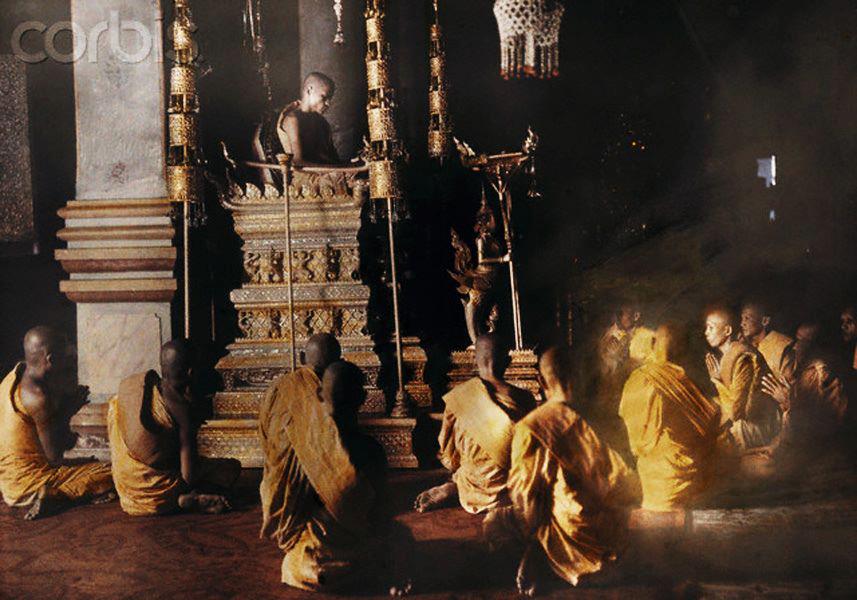
Buddhism (Hinayana), Pagoda, and Monk of Cambodia

Khmer Pagoda (Wat)

After the fall of Angkor, Buddhism (Hinayana) has been the formal religion in Cambodia in stead of Hinduism which was the dominant religion since the creation of Khmer State in the early 1st century under the leading of His Royal Majesty SORMA (King of Nokor Phnom-Khmer State) who later got married with King KORDIN from India. Therefore, Hinduism was brought by King KORDIN into Khmer State and it lasted until the end of Angkor Empire. It should be remarked that Buddhism (Mahayana) had also been one of the religion before and during Angkor Empire, too. The evidence for Buddhism (Mahayana) can be seen at Bayon Temple and other temples which were built by King Jayavarman VII such as Buddha statues, King Jayavarman VII statue sitting for concentration as Buddha, and sculpture on those temples in which most of them were damaged by some believers of Hinduism as violating the Buddhism (Conflict of Religion for short period of time in the end of Angkor Era). Buddhism of Mahayana and Hinayana were a bit difference in daily practice. However, since the Buddhism of Hinayana was more satisfied for Khmer people and the less reliability of Hinduism and Buddhism (Mahayana) in controlling the state losing documentations through the invasion from Siam State (Thailand), King of Khmer Kingdom and Khmer people changed to believe the Buddhism of Hinayana. Since then, there were a lot of pagodas and Buddhist statues built from the early of 15th century. Pagodas (in Khmer called Wat) were built of wood other than stone which was used for building temples in previous era, so it was the end of temple building in Cambodia. Exceptionally, most of Buddha statues were built of stone. Angkor Wat Temple which was built from 1113 to 1150 under the King Sorya Varman II was changed to be Buddhism pagoda and became a popular pagoda in Longvek Era (from the end of 15th to the end of 16th century). More importantly, the tradition of letting young man to be a monk has been beginning from that time until today. According to the tradition of Khmer nation, most of the young men had to live in pagoda as a month to learn the Pali Sanskrit, Buddha’s dharma, Khmer Literature, Khmer History, and the psychological education. Some men went to live in the pagoda since the youngest age to serve the monk until they became the adult in which they could be allowed to live as a monk in the pagoda for showing their gratefulness for ancestors and especially their parents. They learnt to be the leader for the country as the leader for their family in the future. All Khmer men who used to live as monk were seen as the polite and thoughtful men for women to depend on. Buddhism of Hinayana allowed Khmer people to gather good documentations from one generation to another generation by keeping in the pagoda. However, those documentations usually lost several times during the war with neighboring countries such as Siam State (from 15th to 19th century) and Vietnam State (from 17th to 19th century). Most of important documentations and valuable Buddhist statues were taken to Siam State through the invasion several times after the fall of Angkor Empire, especially during the invasion of Siam State on Khmer Kingdom in conquering Longvek Capital in 1594. Some of the left documentations were fired by both countries in the following regime. Even though there was less documentation and a lot of wars, Khmer people still did their best to protect and gathered their memory about Buddhism into documentations again. Under the French colonial, Buddhism was more secured and developed in good condition. After getting independence from France on November 9th, 1953, Buddhism was in the golden age until April 17th, 1975. Unfortunately, every thing related to Buddhism was seriously damaged in Pol Pot or Khmer Rouge Regime. Most pagodas were broken and some of them were considered as the place for storing rice, salt, and living place for pig, etc. Therefore, picture on the wall and ceiling of Khmer ancestors in ancient pagodas whose age was more than 100 years was affected in bad condition as the example of Kompong Trolach pagoda in Kompong Chhnang Province. Most of Buddhism documentations were completely fired and most of the monks were killed. For a few decades of these local wars in Cambodia, Buddhism reduced its influence on Khmer people’s believe since the practice of some monks today has been seeing weaker and weaker. As the result, some of residents in this generation still believe on Buddhist in mind other than some of the monks. However, the Buddhism practice and believe of Khmer people in some area of Cambodia, southeastern area of Thailand, Kampuchea Krom region (southern region of Vietnam), and in foreign countries is considered to be good. In short, there is optimism for better practice of Buddhism in Cambodia in the future as the golden age (1953-1975) and a hope for Buddhism management to take action to reform what is bad into good again. Buddhism is really important since it is the guideline for Khmer people. “If there is a change, Control it in good manner!”

By: POK Panhavuth


Thursday, May 19, 2011

SIN Sisamuth - ស៊ីន ស៊ីសាមុត “Akthireach Samleng Meas” (Golden Voice of Cambodia)

ស៊ីន ស៊ីសាមុត
SIN Sisamuth

SIN Sisamuth was the most famous singer and talent lyricist in Cambodia before Pol Pot Regime, titled “Akthireach Samleng Meas”. His voice is soft and very sweet to listen. He sang different kind of songs like traditional (Romvong, Lam Leav, Saravan…), Rock & Roll, Twist, Jerk, Jazz, Cha Cha Cha, Ago Go, Madison, Hala Hala, Mambo, Ayai, Yikae, Chapey, Bassac, emotional, etc. He was born on August 23, 1932 in Steung Treng Province. On the day of his birth, there was the strange phenomenon that all the chicken in the village shouted as the welcome for his birth in the year of rooster. SIN Sisamuth had four siblings; two brothers and two sisters. He was the youngest child in the family. His father, SIN Leang, was the prison guard in Battambang Province and the former revolutionized soldier against the French Colonial; later he died because of serious illness. SIN Sisamuth used to live with his father some time in Battambang Province. His mother, SEB Bunlei, was a Laotian-Chinese; after the death of his father, she remarried and gave birth to another two children.

SIN Sisamuth was considered as serious and helpful. He was a quiet man and some days talked only a few words per day; he usually locked the door of his room and concentrated on song writing. In writing songs, he usually consulted with three different dictionaries (Khmer, Pali, and Sanskrit) to choose the right words carefully. His house in 1970s was near Tuol Tumpong Market (Russian Market) along the road 454 in Phnom Penh today. His favorite food is Laotian and Khmer food including Prohok and Pha Ork Trey; he did not have alcoholic drinks, chili, pepper and cigarette since it affected his voice. Additionally, one of his friend said that while he and SIN Sisamuth was drinking coffee in the morning; SIN Sisamuth talked and felt unconscious about the amount of sugar he had put into his coffee. Therefore, it means that SIN Sisamuth did not take much sweet things that might cause problems to his voice. It should be noticed that after finishing performing, he usually ate porridge with his co-workers and SIV Sun was an administrative person as secretary of SIN Sisamuth to arrange the documents tidily and assist SIN Sisamuth in other administrative tasks. In his free time, he likes playing soccer and flying kites. Besides, he likes watching film, Khmer and French. He could speak Khmer, Lao, Thai, French and English very well.

He attended the primary school in Steung Treng Town when he was five years old. He was a smart and kind boy reading books during his free time; everyone in the school liked him. He also showed his interest in music when he was 6 years old, his school usually called him to play guitar during the special ceremony. Furthermore, he usually visited the nearby pagoda studying more from monks about Khmer Literature, Pali, Sanskrit, and the articles on Buddhism. His hard working brought a success for higher education. In 1951, he moved to Phnom Penh to pursue his higher degree in Health Science staying with his uncle; he rarely went out and just stayed at home after school. Being interested in singing and musical writing, he strived very hard to learn by himself for both skills. His talent showed up in the college being popular among students and professors. He was usually nominated to sing and play musical instruments during the college ceremony. Simultaneously, he created a band, Preah Chan Reaksmey, consisting of 9 members. In early 1953, his band became so famous in Phnom Penh and was invited to join the national radio band, Reach Sey. Then he sang in many occasions such as wedding ceremony, radio program, etc. His parents were not happy about him taking singing career, but he had to pursue what he likes from birth.

In 1953, he became a famous radio singer singing and writing music using mandolin. Simultaneously, he graduated from college in the major of Health Science and also worked for Preah Keto Mealea Hospital besides singing career. After that, he married his cousin, KHAO Thorng Gnut, as the arrangement of older people in the family and got four children for the following years. He used to challenge in a singing contest in Phnom Penh and got the second rank since he lacked of gesture while he was singing. In fact, everyone believed that he had the greatest voice and would get the first rank if he used gesture well. His fame had been quickly well-known and the information was brought to Queen SISOWATH Kosomak Nearyrath Sereyvathana, the mother of King NORODOM Shihanouk. She invited SIN Sisamuth to join the royal band singing for the formal occasions of the Royal Palace.

One of royal songs sung by SIN Sisamuth was “Romvong Ekareach” to alert all Cambodian residents to show their happiness and solidarity for Khmer Independent. Also, he and his friend, SOS Mat was appointed by Queen SISOWATH Kosomak as the permanent nurse in the Royal Palace, too.  Since then SIN Sisamuth gained more respect and honor from the public and royal group; he was filmed in King Shihanouk’s movies singing with SIENG Dy still remained until now. In the 1950s, he pursued his singing career in public with other singers and lyricists like SIENG Dy, MAO Sareth, KEO Setha, POV Sipho, SVAY Som Oeur, HASS Salorn, MA Laopi, SOS Mat, MAE Bun, etc. In Sangkum Reastr Niyum Regime, SIN Sisamut usually followed King NORODOM Shihanouk to overseas singing. The King’s songs he sang were “Phnom Penh”, “Reatrey Chuob Pheak” (with KEO Setha), Tassana Krong Phnom Penh (with MAO Sareth), and so on. Other famous songs are Somros Chhnae Kep, Chong Srol, Violin Snaeha, Anusavry Phnom Kravanh, Srey Sros Khmeng, Prek Eng Os Sangkheum, Steung Pursat, etc. Unfortunately, his fame caused the family conflicts and his wife went back to Steung Treng Province being a nun.

His voice became sweeter and sweeter. In 1963, he sang the song “Champa Battambang” quickly catching the attentions of all Cambodian people; this song was broadcasted as the first song on Khmer TV in 1965 according to his interview on TV in 1971. In this 1960s, his popularity went to the peak of his fame. He started to sing with next generation singers like SO Savoeurn, DY Saveth, PEN Rorn (1966), ROS Sereysothea (1967), HUY Meas, IN Yeng, MEAS Samorn, HEM Sovan, etc. Singing not only in Khmer, he also sang in English, French, and Thai. Therefore, he got an innovative idea to mix the music of foreign and Khmer together creating very good songs. In 1967, he wrote and sang the song “Champei Siem Reap” for his wife; they lived together again. He continued to write more songs; his songs were more famous with his new singing partner, ROS Sereysothea. Unfortunately, ROS Sereysothea returned to Battambang Province because of the conflicts with her husband, SOS Math. Facing such situation, he took action to recover by persuading ROS Sereysothea to come back and protected her from the disturbance of SOS Math. One day, he stood to prevent SOS Math disturb ROS Sereysothea while they were singing together the song “Kort Bros Mok Khmol”. He said he was the one to take her there, so he must the one to protect her. Then SOS Math left there quickly.

On March 18, 1970 the coup d’état in Phnom Penh caused a change to the life of SIN Sisamut. He was forced to sing the patriotic songs against King Shihanouk and Khmer Rouge Army even though he paid respect and trust to King Shihanouk and Royal Family. Those patriotic songs are “Lea Srey Tov Chbaing”, “Samrek Chheam Khmer”, “Lea Pov Tov Bomreu Chiet”, “Bong Ba’Oun Bei Neak”, etc. In this regime, he did not have enough time to write songs, so most of the songs he sang were written exclusively by other lyricist VOY Hor. His voice still kept him the most famous male singer in Cambodia from the early 1950s to the mid 1970s. In 1974, King of Thailand called him to live in Thailand and be a singer for Thai nation instead of Cambodia. Being wrong to think that way for SIN Sisamut, he would devote his life to die in his homeland better than running away, so he refused to that request.

On April 17, 1975, SIN Sisamut forced to leave Phnom Penh separately from his family for Koh Thom district, Kandal Province. On the way, he met KONG Bunchhoeurn and talked a while; a Khmer Rouge Officer came with the radio broadcasting his song and asked him whether that is his voice (Nis Chea Samleng Mith Men Te?). One month later in Koh Thom District, he was forced by Khmer Rouge officers to sing the songs for Khmer Rouge Regime, but he failed to satisfy the Khmer Rouge Officers. On May 18, 1976, he was killed; before he was killed, he asked the Khmer Rouge Officers to sing a patriotic song as the last voice of his life. Somehow when he finished, they killed him immediately. His wife and two children among four children were alive after this black regime.

In conclusion, life of SIN Sisamut (1932-1976), Cambodia’s Golden Voice, was a real experience for all people to study and learn. Being so sad to lose such a talent person from Cambodia; not only his talent in arts and medical skill, but his strong supports on his nation was gone with his soul. He died with less hope for the future of Cambodia; but his soul will see the development of Cambodia today and keep smiling again for the future prosperity of Cambodia. “Even though there is the death in front, believe and trust on own nation will never be forgotten!” 

(Source: Wikipedia on SIN Sisamuth in Khmer Version and other sources)

By: POK Panhavuth

Khmer People, The Main Citizen of Funan, Chenla and Kambujadesa Empire (Cambodia)

  Khmer Woman From Kampong Cham Province in the Past Royal of Angkor Khmer Kambujadesa Empire (Cambodia at the peak in history) Khmer people...